
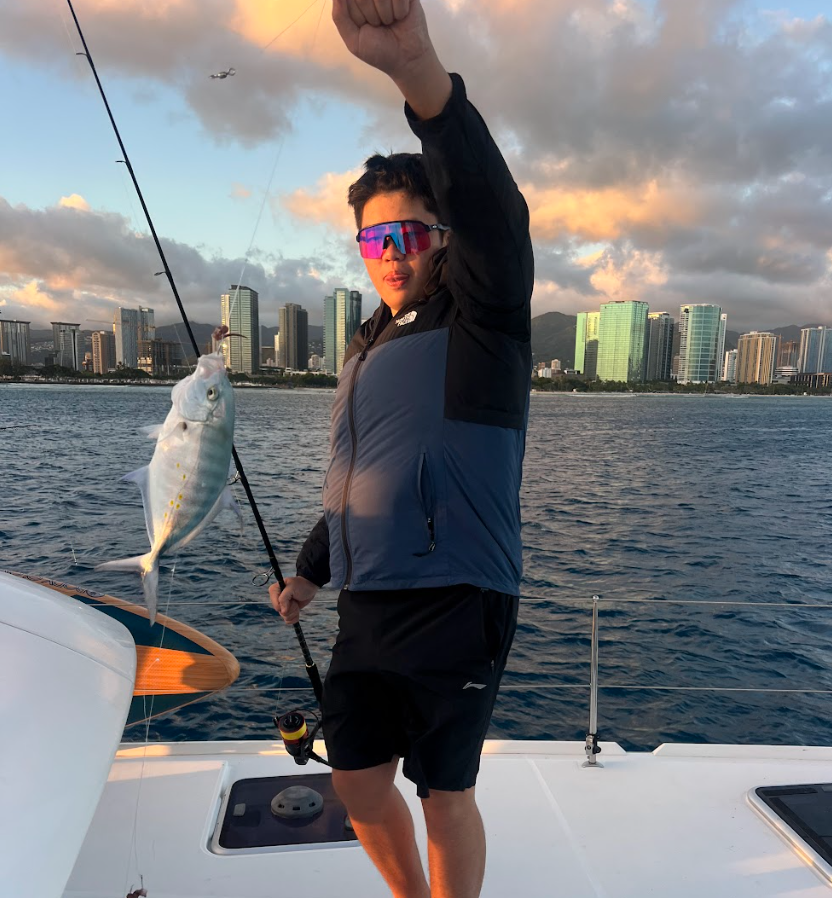
The waters off Kewalo Basin drop into open Pacific within minutes. Mahi mahi, ahi, ono, marlin, here's what's running, when, and what a fishing charter on a private catamaran actually looks like
Honolulu is one of the few cities on earth where you can leave the dock, clear the channel, and be fishing productive deep-water grounds within 10 to 15 minutes. The Pacific Ocean floor drops off steeply off O'ahu's south shore. That geography is the reason the fish are there. And it's the reason a morning on the Island Jewel can put mahi mahi, yellowfin tuna, wahoo, or blue marlin in the cooler before the rest of Waikiki has finished breakfast.
What makes a private charter the right way to fish these waters — rather than a shared sportfishing boat — comes down to the same thing it always does: the day is yours. The captain fishes toward your preferences, not a fixed route. The pace is yours. The catch is yours. And when you're done fishing, you can snorkel the reef, swim off the bow, or simply sit on the deck with a drink and let Diamond Head fill your view on the way home.
What's in the Water Off Honolulu
The south shore of O'ahu sits at the edge of the Pacific's richest pelagic fishing grounds. Five Fish Aggregating Devices (FADs) — large anchored buoys placed by the State of Hawaii, sit in the offshore waters, drawing schools of tuna and other pelagic species to known locations. Dedicated sportfishing captains run to the FADs daily. But even without them, the steep drop-off south of Kewalo Basin concentrates fish year-round.
What Swims Off the South Shore of O'ahu (The Species)
Peak: March – October
Peak: May – September
Peak: June – October
Year-round — summer peak
Honolulu's south shore fishes year-round. Unlike seasonal destinations that shut down in winter, the Pacific off O'ahu maintains productive fishing in every month — it's the mix of species that changes, not the quality of the fishing overall. (
What a Fishing Charter on the Island Jewel Actually Looks Like
Most dedicated fishing charters in Honolulu are purpose-built sportfishing vessels — outriggers, fighting chairs, rod holders, freezers. They're excellent at one thing.
The Island Jewel is a 40-foot sailing catamaran. It is not rigged as a dedicated sportfishing vessel, and it doesn't pretend to be. What it offers is something different: a private day on the water where fishing is part of a larger experience. No dedicated sportfishing charter can offer this flexibility.
"The catch goes in the cooler. Then someone jumps off the bow. Then the sails go up. This is what a day on a private catamaran looks like — not one thing, but everything."
This makes the Island Jewel particularly well-suited for mixed groups: the angler who wants to fish, alongside the partner who wants to snorkel, alongside the kids who want to jump off the boat. The day doesn't have to be either/or. Fishing in the morning, swimming in the afternoon, watching the sunset over Diamond Head on the way back to Kewalo Basin — that's a full day.
What to Bring for a Fishing Day
What Happens to the Fish
This is the question everyone asks eventually. In Hawaii, charter fishing follows a practice called the "captain's fish" rule: the catch legally belongs to the charter vessel. In practice, most captains — including the Island Jewel crew — share the catch with their guests. If you land a mahi mahi and want to take it back to your Airbnb and cook it, the conversation about that happens on the water and almost always ends in your favour.
Larger pelagic fish — blue marlin, in particular — are typically released. This is not a legal requirement but a conservation standard that the Hawaiian sportfishing community has broadly adopted. A marlin that fights its way to the boat has earned its freedom. It goes back.
For edible species — mahi mahi, ahi, ono, aku — the crew will pack the catch in ice aboard the boat. You leave the dock with it. Several restaurants in Honolulu will cook your catch the same evening with advance notice.
Want to add fishing to your charter? Tell us when you book. The captain will plan the route accordingly — working the FADs and the productive drop-off areas south of Kewalo Basin for the first part of your charter, then transitioning to swimming, snorkelling, or sailing as you choose.
Call 808-807-4800 or visit the contact page to book your fishing charter.
One More Thing Worth Knowing
The waters off Kewalo Basin have been fished by Honolulu's working fleet for a century. Japanese sampan boats left this harbor before dawn every day for decades, hauling aku and ahi using traditional pole-and-line techniques. The fish that made Diamond Head's Hawaiian name meaningful — ahi, the yellowfin tuna — run the same waters your charter will cross.
That history is part of what's underneath you when the Island Jewel clears the harbor mouth and the captain turns south toward the FADs. The Pacific is 65 million square kilometres of productive ocean. Off Honolulu's south shore, it starts immediately.
Browse the charter guides for help planning your day, or check the FAQ for common questions about what to bring, how long to book, and what to expect on the water.